

Exclusive Services
It’s been theorised and studied for years and years; what does the human brain benefit from learning a musical instrument? Let’s firstly look at the brain as a muscle; the most important muscle in your body. Similar to how an athlete will go to the gym every day to strengthen their muscles, humans need to train and strengthen their brain. Many people approach this in different ways, some read challenging texts, others play cognitive brain games, some even learn a new language. However it is done, the brain needs to be fed in order to grow. Learning a musical instrument not only sustains and feeds the brain, but it also improves so many other cognitive and physical aspects of the human body.
1. Playing a Musical Instrument Improves Memory
2. Music Helps Relieve Stress
3. It Makes You Smarter!
4. It Can Build Your Confidence and Give You a Sense of Achievement
5. It’s Fun!
Piano Lesson
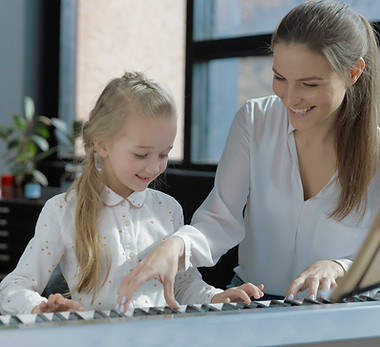
Benefits of Playing the Piano:
It’s good for your physical health
Regular piano playing offers different physical and physiological advantages to players. It sharpens fine motor skills, improves dexterity and hand-eye coordination. Music has also been shown to reduce heart and respiratory rates, cardiac complications, and to lower blood pressure and increase immune response. Playing the piano also makes your hands and arm muscles much stronger than the average person.
Benefits of Playing the Piano:
Improved Aural Awareness
Do you have a naturally musical ear, or are you tone deaf? Playing the piano can improve your overall aural awareness no matter where you fall in this range. Playing the piano trains you to recognize tones, intervals, and chords as well as helping you to develop a sense of pitch. And it doesn’t matter how young or old you start! No matter your age, playing the piano and taking piano lessons helps to improve your aural awareness.
Is aural awareness important anywhere other than music? Yes! Good aural awareness makes it easier to identify and understand sound patterns of foreign languages, can fight dyslexia while it is still developing, and can help you if you have trouble hearing when there is a lot of background noise.
Benefits of Playing the Piano:
Human Growth Hormones (HgH)
(From WebMd) Human growth hormone is produced by the pituitary gland. It triggers growth in children and adolescents. It also helps to regulate body composition, body fluids, muscle and bone growth, sugar and fat metabolism, and possibly heart function.
Studies show that students who take piano lessons had increased levels of HgH in their system. This is a positive side effect of taking piano lessons because growth hormones help keep energy levels up and prevent aches and pains in old age.
Benefits of Playing the Piano:
Constructive Criticism
Students of the piano get lots of positive feedback as well as constructive criticism from their teachers. Receiving criticism is never fun, but when offered gently and in small increments over time, it prepares the student to accept feedback in a positive way. This ability to respond to, and learn from, criticism carries over to other aspects of daily life, such as school, work, and relationships.
Benefits of Playing the Piano:
Live a More Beautiful Life
This benefit is definitely more subjective than the others, but hear us out! Music is incredibly powerful, and piano music, in particular, can bring out strong emotions in both the listener and player. The piano was designed to reflect human emotion and feeling, so it’s no wonder that people react strongly with joy, sorrow, and wonder.
And the wonderful thing about piano music is that you can share it with your family and friends! Music is a language that crosses all barriers of age, ethnicity, etc. It is a wonderful way of bringing together the larger community, as well as smaller groups of family and friends.
Violin Lesson

Learn to Play the Violin
It will improve your posture
The way violins are held and played requires your core to be engaged. If you’re playing without core engagement, you’re not playing properly.
This is true even of violin players who sit a lot as they’re playing. If the upper body is not held firmly upright, it is very difficult to play correctly.
You will be tightening your abs, bringing your shoulders back and down, and sitting up tall while you learn to play the violin.
This good posture is likely to become a habit over time. Soon, you may find your posture getting better all the time, not just while you play.
It will strengthen your arms
The violin is a great instrument for toning your arms and upper body.
Violin is played with active arms, so those arm muscle groups will be strengthened as you learn to play the violin.
The upper arms will work very hard. But other muscle groups that you’ll be working out include your neck, shoulders, back, and the core muscles you use for your posture. Playing violin is a great upper body workout.
They are the smallest string instrument
Violins are the smallest instrument in the string instrument family. If you have a small frame, or want an instrument that’s easy to transport, a violin is a great choice.
They are relatively lightweight and easily portable, which is great if you move often or plan on taking your violin many places with you.
It will challenge your dexterity
With some instruments, like the piano, both hands are essentially doing the same task. With violin, though, your right and left hands have distinctly different tasks.
Your left fingers will be pressing on the fingerboard to create the notes, and the left hand and arm holds the violin itself.
Meanwhile, your right hand is in charge of the bow. It will move the bow over different strings at different speeds, depending on what the song calls for.
This kind of work is challenging to your physical coordination and is good exercise for your brain as well.
It’s an important orchestral instrument
If you learn to play the violin, you are learning the instrument that makes up one of the most important sections in an orchestra.
There are many string instruments in orchestras. But there’s a reason why out of all of them, so many people are familiar with the sound of the violin.
These instruments often play the main parts of the songs, and tend to get more solos than many other instruments.
If you’re considering a future as an orchestral musician, it can be good to play such an important instrument. There will almost always be a place for violins in any orchestra.
This also makes it easy to find music to play and practice with, since so many of these songs have major violin parts.
It’s versatile
Violins are in demand in many places in addition to orchestras.
These instruments are also common in string quartets and piano duets. Many beloved classical songs involve the violin.
Yet it’s not uncommon to hear violin play a part in modern pop music as well. Even rap, hip hop, and other less expected genres have found ways to incorporate the violin. [1]
If you learn to play the violin, you will have countless options for what kind of music you can play, and what other musicians you can play with.
It’s a challenge to play
This may not sound like a bonus right away, but it’s actually a good thing to learn a difficult instrument like the violin.
A guitar has frets to help show where your fingers go. A piano lays all the keys out in front of you. But a violin requires precision and skill to create the notes, without markers to show you where your fingers belong.
There is no consensus on which instruments are hardest to play, of course. But these unique challenges to learning the violin are not so difficult as to be overwhelming.
Instead, it will give you an advantage if you decide to learn other instruments later.
You will become more graceful
The way a violin is played requires a unique degree of coordination and smooth movement.
As your hands, arms, and core work together to play while you hold your instrument, you will develop a more naturally graceful movement.
Watch a professional violin player and you will see the gracefulness for yourself. As you learn to play the violin, you too will be developing those beautiful movements.
You will gain a more musical ear
Because the violin doesn’t have things like fret boards or keys, you may not know right away that your finger is in the right place to create the note.
Your listening ability will have to take over to tell you if the sound you’re making is right or not. This will challenge you to recognize notes, so that someday you may be able to “play by ear”: that is, recognize and copy the notes just by listening to a song.
It comes in multiple sizes
Violins are actually not one size fits all. There are multiple sizes of violin, which correspond to the length of the instrument.
This will allow you to choose the instrument that feels most comfortable to you when you learn to play the violin. Many instruments don’t allow this kind of flexibility when it comes to choosing the size.
Guitar Lesson

Playing the guitar is a great way to express your creativity, expand your possibilities and grow as a person. It will build your self- confidence in your day-to-day life as you become a more confident player, which is a huge benefit to playing this instrument! You might even become a multi-instrument player, a producer, a sound engineer, or a studio musician someday! Playing the guitar is a great skill and talent to have!
With the guitar, you can play all different styles of music, such as jazz, blues, classical, Spanish, rock, heavy metal, country, or pop. You can entertain a wide variety of people with these different styles and you can learn to understand other music, artists, musicians and why they do what they do. You could even create your own style on the guitar.
You can play in a band (how cool is that?) or you can play by yourself. It is difficult to play alone with some other instruments, such as the drums. It is a way to connect with others, at guitar workshops or just jamming with your friends. Learning a few simple chord progressions will give you the skill to play with just about anyone.
You can teach others to play once you are proficient. It could be a future career for you! You could inspire future students the way your music teacher inspires you.
As a guitarist you are more mobile and flexible as a musician. The guitar is totally portable and you can take it just about anywhere. Dragging a piano or a drum set around with you would be impossible!
Playing the guitar can help you forget about your daily problems and break out of the “9 to 5” life. Learning the guitar is thought to be relaxing because of the therapeutic nature of the instrument. It allows you to focus on one things and escape from the pressures of life. Studies show that the highest demographics of people learning the guitar are men over 40 who work full time and have a family. They are looking for a break from the stresses of life and they want to do something for themselves.
Playing the guitar is a great emotional outlet. Creating the music that expresses how your feel and playing it for yourself if an incredible emotional release. It’s even more exciting if you have written the music yourself as well.
There are many physical and mental benefits to playing the guitar too. It is a great arm and hand workout. It can lower your heart rate and blood pressure. Learning new things keeps your brain sharp and can improve your memory and alertness. It can also help to relieve chronic pain.
Playing the guitar develops discipline and patience. These are beneficial skills that you will carry over into other parts of you life.
Cello Lesson
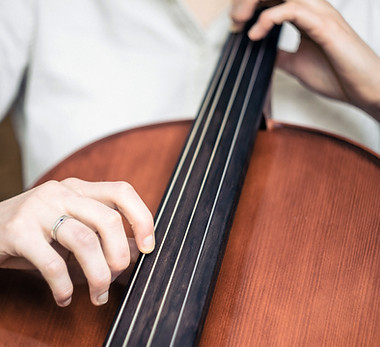
Reasons Why You Should Learn to Play the Cello
Endless solo options
If you opt for the cello over other instruments, you will have more solo options to enjoy than the average musician. The list of solos that one can choose from is endless as almost all well-known composers including Bach created solo pieces specifically for the cello.
To build your physical strength
Granted, playing the cello will not produce the same results that cardio will, but it certainly has some physical benefits. First and foremost, the cello is not a small instrument- it requires physical strength to move it from place to place, which can be great for your physique. Also, although the player has to be seated when playing the cello, the muscle movements needed to support the cello properly and to execute the various bowing techniques consequently helps to improve one’s posture, as well as enhance upper body strength.
Ideal for young students
Anyone can learn how to play the cello, but it is especially recommended for young players. Young students make excellent cello students because youth typically comes with the enthusiasm for learning a new instrument. Because young minds are also characterized by mental elasticity, it means that younger players tend to absorb new learning material faster than the older ones. Adult players also have their own sets of advantages such as enhanced control but it is always advisable to take up an instrument early on when one is still young.
It has an impact on your cognitive process
Learning how to play the cello is a comprehensive venture that incorporates all sorts of learning styles such as auditory, visual and kinaesthetic learning styles that make it easy to concentrate. The more one practices, the more one’s brain develops new connections that can be replicated in other areas of learning such as mathematics. Playing the cello also strengthens other cognitive processes such as coordination and multitasking, which are skills that are beneficial in real life.
To enrich your memory
The cello is an extraordinary instrument that can also be quite rewarding. The process of learning the cello requires extensive comprehensive learning which in turn does wonder for your memory. By combining various mental exercises in a structured manner, the process of learning actually stimulates and strengthens certain areas of your brain such as memory and comprehension. Moreover, learning the cello stimulates and creates connections that last all through adulthood.
It is extremely marketable
The cello is not the simplest instrument to learn, but when mastered, it can present an individual with a lot of professional opportunities. Mastering the instrument such as the cello requires complete dedication and the development of certain skills such as a keen sense of timing and the ability to work in a team. If you choose not to pursue the cello professionally, skills such as these that are intangible can also be valuable in the market place.
The cello is versatile
The cello is one of the most versatile instruments there is. Unlike most other instruments, the cello has the uncanny capacity to produce a really high note one minute and can sink to the lowest notes in the next. The cello’s versatility is largely the reason why it can be utilized in all sorts of musical genres including electronic, contemporary, rock, and so on and so forth.
It produces the best sound
Musicians have long agreed that the cello is one of the only instruments that mimic the human voice well. The sound produced by the cello is not as high pitched as the violin and it is not low like the bass. Instead, the cello produces a sound that is deeply layered and rich, which helps to explain why it is so popular among classical musicians. Owing to its middling range, it is often reserved for the richest and warmest parts of the orchestra.
It is good for you
Playing the cello allows you to escape the hustle and bustle that comes with contemporary life. For instance, the cello can serve as a therapeutic tool when one is having a bad day and it can also be a wonderful form of stress relief. When playing, it is easy to quickly immerse yourself into the experience so it can also be a wonderful form of meditation and relaxation
Vocal Lesson
